2026 Florida Legislative Session in Review
By FLDR, Joseph | 3 min read
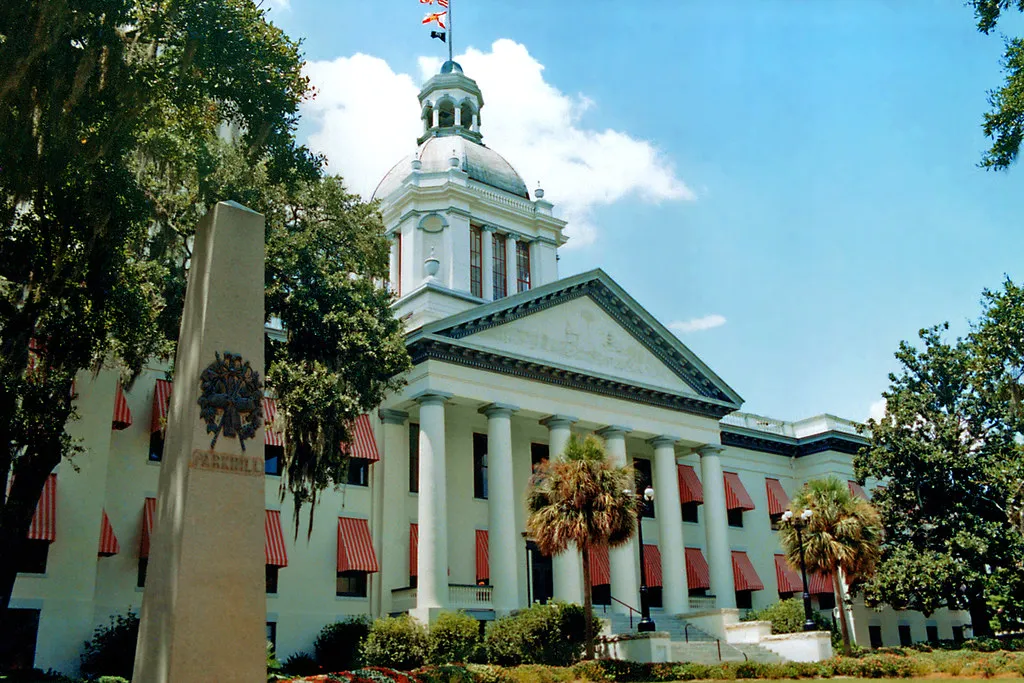
March 13th marked the end of the regular Florida legislative session for 2026. Anything that passed will be heading to the governor's desk, and all other bills have died. While lawmakers move on to the three likely special sessions dedicated to finishing the budget, redistricting, and property taxes; we have an opportunity to review the state of bills we were tracking, and what we can learn from them.
Status Report
To make a long story short, none of the bills we tracked passed except for one.
The good bills we followed were related to right to repair! The main one was HB 487, the Right to Repair for Mobility Devices, that would have made it possible for motorized wheelchair users to be able to fix their own chairs and get the parts and documentation they need in order to fix them. Two other bills we followed were SB 806 and HB 1255 which focused on general right to repair. While they did move along in the committee process, ultimately none of them passed.
The bad bills had to do with privacy-invasive age verification. SB 482 was the "AI Bill of Rights," which was mostly fine except for the fact that you had to identity yourself in order to use an AI chatbot like ChatGPT. Later on we learned about SB 1722 which sought to make you identify yourself in order to use the app store on your phone. In both cases your identity could be linked to your activity on the tool in question and you would therefore have no privacy around what you did with them. These also died.
The one bill which we weren't directly tracking until the end was SB 484, the sister to the AI Bill of Rights which introduced restrictions on data center construction! This bill passed and is likely to become law because it was part of Governor DeSantis' original proposal. Under the new bill, data centers have to pay fully for the consumption of utilities like electricity and water rather than pass on some of the cost to the nearby community. While this doesn't fully address the concerns of residents near potential construction like those opposed to Project Tango, it is a step in the right direction.
On the whole, we saw the right to repair bills be left behind, which is bad; the age verification bills get left behind, which is good; and a bill regulating data centers which passed. From that perspective it's a net win, albeit not for the disabled community.
Reflections
That isn't to say that we had much to do with this outcome. The main bills that got the most coverage were related to AI, and the portion that was left behind was abandoned by the House as it sought to align with President Trump's vision of federal-only AI regulation. Were it not for the president announcing the ratepayer protection pledge, it is likely that the data center bill would have also stalled out.
Still, this session was the first we covered as a collective of concerned citizens! The group this started in is only five months old. Florida Digital Rights is only one month old. We were able to encourage people to call their legislators about these issues who have never called their state representatives before. Our Signal group chat has almost 40 members. Through this legislative session we have built a base of people who want to fight for digital freedom and are tired of being disrespected by technology and the companies that make it.
As we transition to our next priorities of the rise of Flock and the continued question of AI data center construction, we hope you'll learn about these issues, follow along, take action when opportunity presents itself, and consider joining in the advocacy work.
Written by Joseph, Organizer
Enthusiast and advocate for digital privacy, cybersecurity, and free & open source software. Hobbyist. Wants to see the world get better.
Follow us on Bluesky and Mastodon. Share your thoughts on this blog post!